
Knowing how much a storage facility in Tenerife costs is harder than it seems: the monthly rate depends on the volume contracted, the type of room, the area of the island, and the time you will store your belongings. In this guide, with over 15 years of operations in the Canary Islands, we explain the real price ranges, the factors that drive them, and how to avoid the extras that slip into the fine print.
What does the price of a storage facility in Tenerife depend on?
The final price is not an isolated number: it is the sum of several decisions. Understanding what weighs most will help you compare quotes that at first glance seem different and avoid overpaying for space or services you don't need.
Volume contracted (m³ or m²)
It is the main factor. In Tenerife it is customary to contract by cubic meters (m³) in shared rooms or by square meters (m²) if you rent a closed storage unit. As a reference, the moving of a 2-bedroom apartment is around 20-25 m³, and that of a 3-bedroom apartment, 30-40 m³. If you are unsure about your volume, check our guide on moving costs in Tenerife, which includes equivalents to estimate it without surprises.
Type of room: shared vs. private container
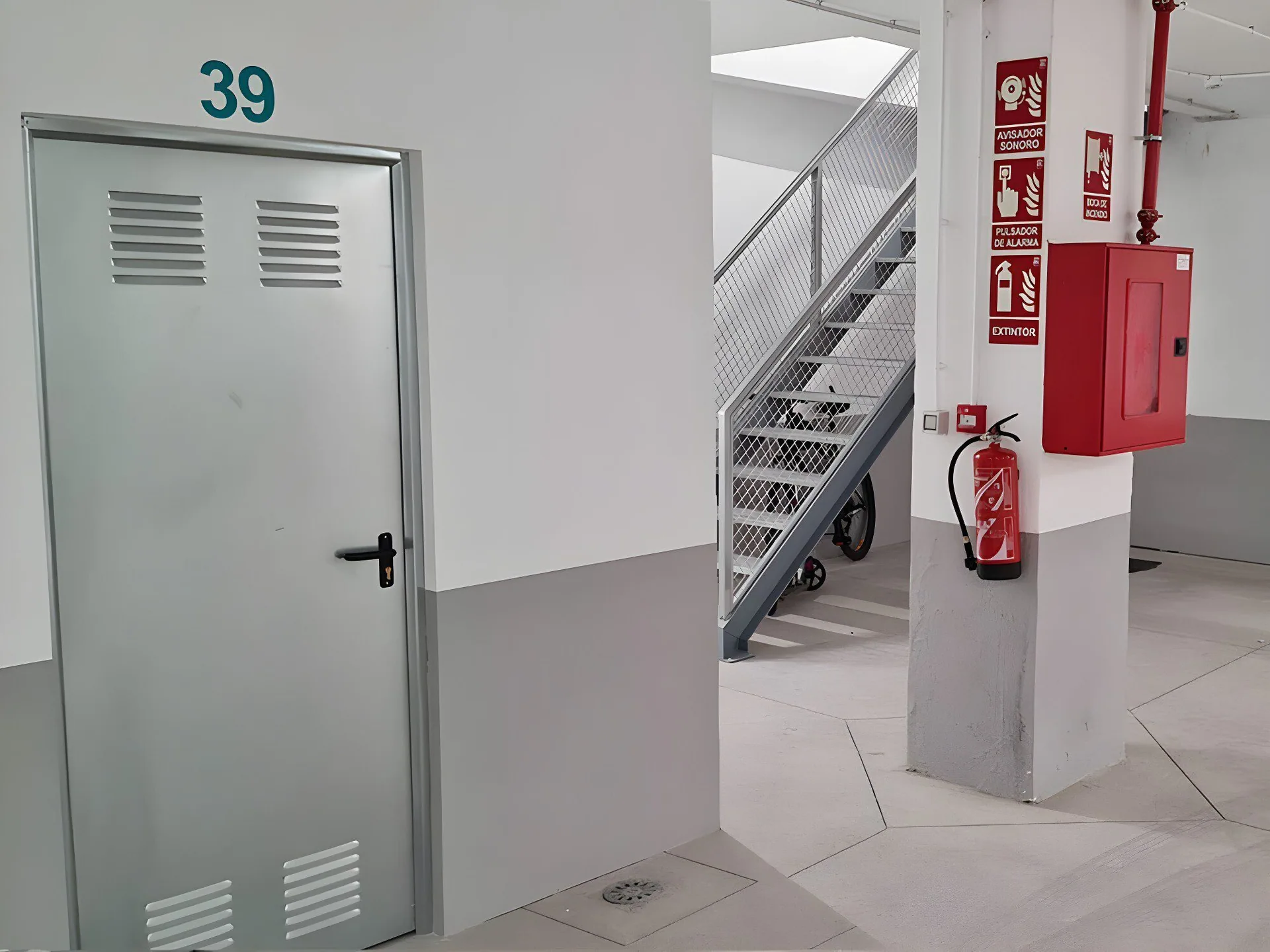
In a storage facility in Tenerife, your furniture is packed in a sealed wooden container and stored in a common warehouse. It is the most economical option per m³ and ideal for medium and long-term storage. If you prefer to access it yourself without notice, an individual storage unit would be better, which is somewhat more expensive per m² but gives you total autonomy.
Area of Tenerife and access
Storage facilities located in industrial areas of the metropolitan area (Santa Cruz, La Laguna, Los Majuelos) usually have a different price than those in the south (Arona, Adeje) or north (Los Realejos, Puerto de la Cruz). The distance is not only reflected in the monthly rent: it also affects the pickup and delivery rate, especially if your home is in a historic center or area without access for large trucks.
Rental duration
The longer the commitment, the more room there is to negotiate. Week or month-to-month contracts are more expensive per m³ than quarterly or annual ones. If your storage is occasional (a renovation, a chain sale, a move between islands), always ask for a quote for the "worst" and "best" scenarios, and clarify if there is a penalty for early termination.
Extra services: pickup, packing, and insurance
The monthly rental price almost never includes pickup at your home or packing. These are separate items that should be requested itemized. Also insurance: the legal liability of the storage facility covers the minimum. If you are storing valuable items, contract an extended coverage with declared value and keep a photographic inventory.
How much does it cost? Indicative price per m³
At Horizont Atlantic the storage facility is calculated based on the volume you occupy: around €25/m² per month, with discounts for long stays (6 or 12-month contracts) and proportional first month. These are indicative examples depending on the size of what you store:
- Backpack / small storage unit (≈3 m²): ~€75/month. Boxes, some loose furniture and items from one room.
- Half-size home (≈8 m²): ~€200/month. Contents of a 1-bedroom apartment without large appliances.
- 2-3 bedroom home (≈15 m²): ~€375/month.
- Complete home (≈25 m²): ~€625/month. Large fully furnished house.
The final amount depends on the services you add (home pickup, packing, declared value insurance) and duration. That's why we always give you a written quote in full, with no surprises; and if you don't know how many m² you need, we calculate it for you in the prior assessment.
If your case is a move between islands (for example, waiting for the destination property to be ready), also consult our guide on moves between Canary Islands: combining temporary storage with maritime shipping usually works out cheaper than doing it separately.
Storage facility or storage unit: which one suits you best by price
In many searches they are used as synonyms, but they are not. Shared storage is cheaper per volume, but each time you need a piece of furniture you have to request access and pay a fee. An individual storage unit is more expensive, but you can enter whenever you want. Practical rule: if you're going to access it less than once every two months, the storage facility wins; if you need rotation (renovations, self-employed with materials, seasonal clothing), the storage unit is better.
How to reduce cost without running short of space
These are the adjustments that have the most impact on the monthly bill:
- Disassemble bulky furniture. A sofa, wardrobe, or bed disassembled can reduce volume by 30-40%.
- Reduce tall boxes. Take advantage of internal spaces (inside wardrobes and drawers) to store clothing and light items.
- Adjust the size to the actual inventory. An oversized container is paid in full each month.
- Contract for quarters. Small discounts for commitment reduce the effective rate.
- Combine moving and storage. By contracting both services with the same company, you save on double handling (truck, personnel, mileage).
Before signing: key questions
A cheap quote poorly explained usually ends up more expensive than a clear one. Before you decide, ask and demand in writing: what VAT the rate includes, whether the price is per sealed container or per billed m³, what the entry/exit cost is, what insurance is included and what extras are outside the monthly rate. If you have more general doubts, our guide on how to choose a professional moving company will help you filter out red flags.
Real quote, no surprises
Each storage facility in Tenerife has its own pricing scheme, and the only way to know how much you're going to pay is a written quote with volume, services and duration detailed. If you are organizing a move or need temporary storage, ask Horizont Atlantic for your moving and storage quote: we send it to you without obligation, with a breakdown of rates and no hidden clauses.