
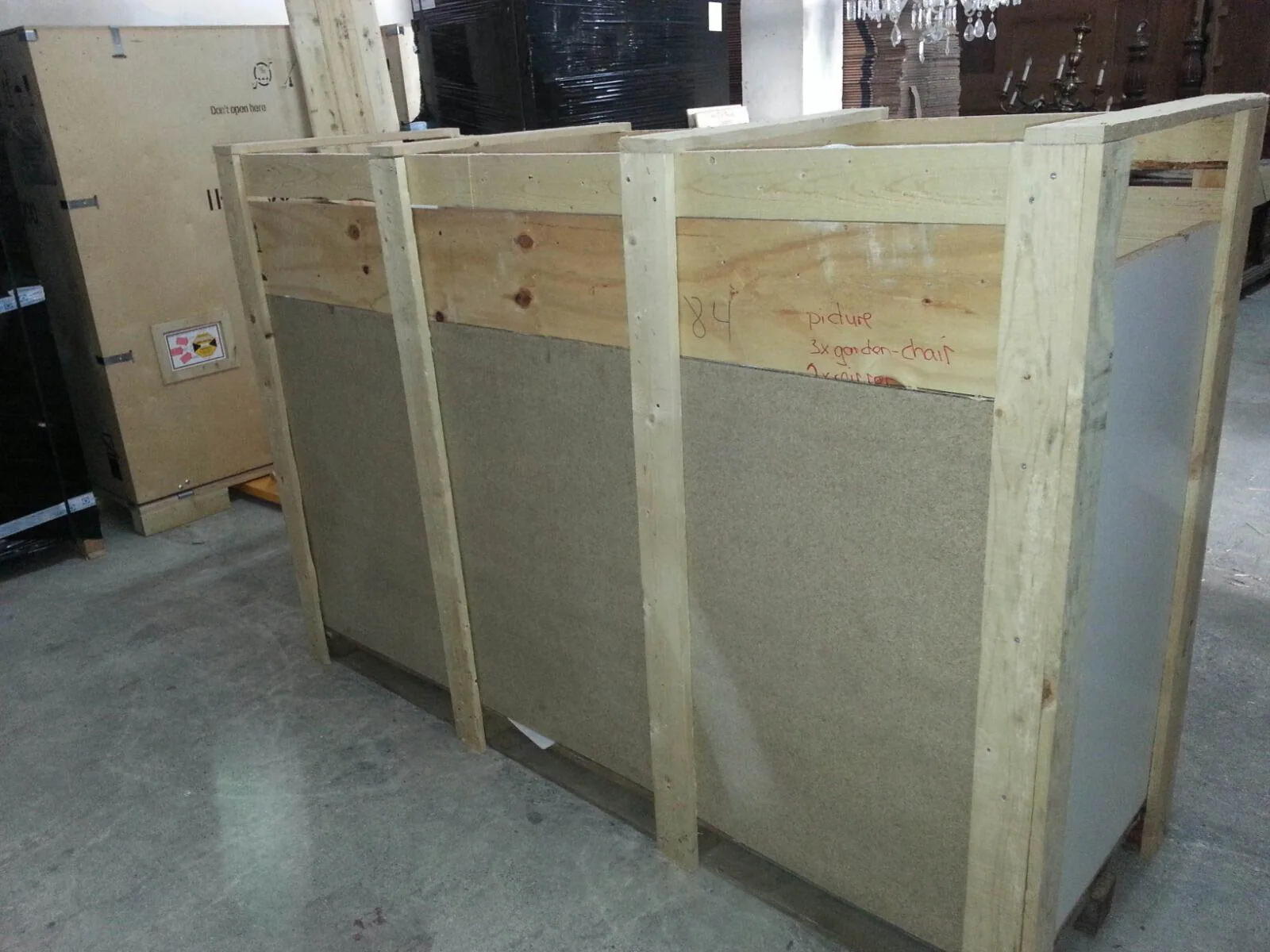
Organising a removal is a task that requires a great deal of planning time. Furniture, textiles, documents or kitchen and bathroom items are seemingly easy to transport, but what happens with more fragile and highly valuable decorative pieces? Is there an answer to how to transport a work of art?
At Horizont Atlantic we offer you the answer to this question, going in depth into how to pack works of art, especially sculptures. What's more, at our company we guarantee that if you trust us, all your belongings will arrive in perfect condition at their destination.
How to prepare a sculpture for a removal
Works of art such as sculptures, paintings or pictures can be seriously damaged during a removal. The correct formula to avoid these incidents is to take timely protective measures and use an effective packing system.
With sculptures, the most important thing is to keep them still throughout the journey and make sure they stay firmly secured. The most recommended packing materials for transporting works of art are bubble wrap, flight cases, wooden crates lined with foam and wooden boxes.
Each of these has its own interesting advantages. Bubble wrap must completely protect the sculpture to prevent the piece from "breathing". Flight cases are used as packaging for works of art because they add extra protection on top of the bubble wrap.
In the case of wooden crates lined with foam, they hold the sculpture or picture firmly in place and it is gradually wrapped in foam to prevent possible impacts from knocks. Finally, wooden boxes make up the most resistant method. It is used especially for temporary exhibitions, when travelling works of art need to be moved.
Tips for transporting a sculpture
Beyond using the appropriate packing materials, before protecting the sculpture every detail of it must be checked, noting down any possible damage that already exists. This report will prove useful should any incident occur during the journey. And it doesn't hurt to add photographs of the condition of the artwork. When packing, small or protruding parts of the piece must be covered individually, following their contour.
During transport itself, many vehicles feature climate control or controlled temperature, thermal insulation in the trailer, air suspension systems to reduce vibrations and anchoring or securing mechanisms to prevent the pieces from shifting.
It is also a good idea to install fire detection and suppression systems, as well as anti-theft security systems and alarms. Removal companies also make use of geolocation, so that the client knows at all times where their belongings are.
For international shipments or longer distances, one option is air transport, which has the same security and protection mechanisms as transport by truck.
Finally, before transporting a fragile or highly valuable piece, it is strongly advisable to take out suitable insurance, covering the risk of damage linked to handling, moving, damage, theft or loss of the sculpture.
Now you know how to transport a work of art. All the advice can be summed up as trusting professionals in the sector, as is our case. At Horizont Atlantic we offer fully guaranteed services to ensure that the removal of your sculptures is a success.
Are you planning a removal?
At Horizont Atlantic we take care of everything: packing, transport and assembly. Removals in Tenerife, between the islands and to the mainland, with 15 years of experience.
Get your quoteFrequently asked questions about transporting sculptures
Is it very different to transport a sculpture compared to a painting?
Yes, sculptures are three-dimensional and almost always heavier. They require: a custom-made box with polyurethane foam cut to the exact volume, the correct position marked (some have a single base and cannot be inverted), reinforcement at fragile points (extended arms, delicate details), transport upright or in the specific position recommended by the artist or appraiser.
How do you pack a bronze or heavy metal sculpture?
Weigh it before packing (a small piece can reach 50+ kg). Reinforced box with internal corner protectors, anti-rust paper around the bronze (it dries it out and prevents oxidation during long transport), 2-3 people minimum for loading, hydraulic trolley if it exceeds 30 kg. Inventory with declared value (art bronzes can be worth thousands of euros).
What about glass, ceramic or porcelain sculptures?
More fragile materials that require maximum care: double boxing (inner box with the piece, outer box with padding between the two), 360° bubble wrap or foam, no point of contact with the inner walls of the box, a clearly visible "EXTREMELY FRAGILE - DO NOT INVERT" label. For unique pieces (Lalique, Daum, antiques) consider specialised art transport.
Do I need specific insurance for valuable sculptures?
Yes, if the piece is worth more than 1,500-2,000 €. The removal's basic public liability insurance covers accidental breakage but with a limit per item. For valuable sculptures: a prior appraisal signed by an expert, declared-value insurance during the removal (1-2% of the value) or a specific fine art policy. Keep high-resolution photos taken before the removal as proof of condition.
How is the cost of transporting a sculpture calculated?
Factors: weight (heavy sculptures require more staff and equipment), volume (large boxes take up more space in the truck), declared value (insurance premium), distance (domestic or international), urgency. Typical cost for a medium sculpture (50-100 kg): packing 100-250 € + additional transport 150-500 €. More on art and collectables: transporting collectables.