
Few things are more dreaded by a person than a removal. It is not only a stressful situation but it can also noticeably affect our mood and state of mind, not only during the removal itself but also in the periods before and after it takes place.
Even if it seems you don't own too many possessions, having to move to another home is enough to reveal just how many objects we accumulate over a lifetime. This can turn your removal into a real nightmare if it isn't carried out properly and if a fragile item isn't packed the right way.
Things get even more complicated if the removal is to or from Tenerife: the transport process is different depending on whether you are leaving or entering the island. How can you make sure nothing gets lost and everything arrives safely? And, above all, how should you pack or wrap the most fragile items in your home?
These are the questions our technicians at the removal company Horizont Atlantic are usually asked, since we specialize in helping clients move to and from the islands.
What counts as a fragile object or item
The first thing to determine is what counts as a fragile item. The truth is that this classification is fairly open-ended and will, in most cases, depend on what the client considers to be a delicate object.
In many cases, whether an item is considered fragile depends less on its features than on how important it is to the client. Beyond the obvious examples, which are televisions, computers or certain paintings, some clients consider a table they bought on a trip to India, or a good stack of books, to be a delicate item.
Whatever the case, a good removal means handling all these precious and valuable items with the utmost care. And the first step is packing your fragile items properly for your removal.
Tips for packing fragile items for your removal
Here are the main tips we at Horizont Atlantic offer for achieving the best possible packing of a delicate item.
Bubble wrap is your ally
Bubble wrap is the best ally of removal companies when working with fragile items. Wrapping decorative figurines, books, paintings or appliances individually in a thick layer of bubble wrap will mean they suffer far less in the event of a knock or mishap.
Many people think it doesn't matter if they put two items inside the same 'bag' of bubble wrap, but this is a mistake: delicate items should always be wrapped individually.
In the links below you'll find a number of companies that can sell you this material online at a very reasonable price.
| Amazon bubble wrap store | Horizont Shop | Plastic packaging store |
Suitable cardboard boxes
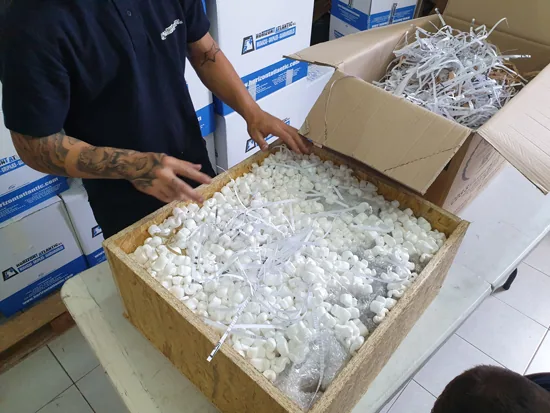
Not just any cardboard box will do for packing a fragile item. For storing fragile belongings it's better to choose thick, sturdy cardboard boxes. Their interior should also be equally well padded with cork or other materials that can absorb any kind of knock they might take by accident.
For glassware you should bear in mind the correct way to pack tableware inside the box. Also take care not to fill boxes that weigh more than 10 kilos.
Mark them as fragile
Seeing a box with a large "FRAGILE" label helps everyone handle it more carefully, both the owners and the removal company's experts. This last tip alone can prevent a lot of problems.
To sum up, all these small tips will be very useful in helping us understand how to pack in order to protect fragile items during a removal.
At Horizont Atlantic we carry out all these processes with the utmost care and diligence, and we work with the best packing materials so that fragile items arrive at their destination in the same condition as at the point of origin.
Are you preparing a removal?
At Horizont Atlantic we take care of everything: packing, transport and assembly. Removals in Tenerife, between islands and to mainland Spain, with 15 years of experience.
Get your quoteFrequently asked questions about packing fragile items
What are the essential materials for packing fragile items?
At a minimum: double-wall cardboard boxes, bubble wrap (lots of it), packing paper or tissue paper (NOT newspaper for white items, because of the ink), strong packing tape, a permanent marker to label items as "FRAGILE", and filler such as crumpled paper or packing peanuts for gaps. For delicate items (glass, porcelain, electronics): add polyurethane foam or rigid corner protectors.
What basic packing rules ensure nothing breaks?
Golden rules: 1) each piece gets its own wrapping (never share paper between pieces), 2) plenty of filler in the gaps (the box should feel weighty but not sound hollow when shaken), 3) a clear "FRAGILE - THIS SIDE UP - DO NOT STACK" label, 4) a reasonable maximum weight per box (15-20 kg), 5) many small boxes are better than a few large ones.
How should you specifically pack glassware?
Wrap each glass or cup in several sheets of paper (especially the base, the most fragile part), stand pieces upright in the box using dividers (never stack them horizontally), fill the space between each piece with crumpled paper, and add a cushioning layer at the bottom and top of the box. For fine crystal glasses: only a single layer per box, never stack layers.
What about extremely fragile items (fine porcelain, antiques)?
Double-box them: an inner box holding the piece with filler, and an outer box 5-10 cm larger with padding between the two. Wrap each item individually in bubble wrap, mark the correct orientation with arrows, label it "EXTREMELY FRAGILE", and give it priority manual handling (last item loaded onto the truck, first one off). For museum-grade pieces, consider specialized professional packing.
Is it better to have a professional pack fragile items?
For removals involving a lot of delicate material (valuable family tableware, antique glassware, artworks, high-value electronics), absolutely yes. Professional packing costs an extra €200-700 but reduces breakages by 60-80% compared with careful home packing. For individual items of very high value, professional packing is still worth it even if you handle the rest yourself. More detail: how to avoid breakages during a removal.