
Customs agent in Las Palmas de Gran Canaria
Tramitamos el DUA en el Puerto de La Luz y de Las Palmas con agente fijo en plaza y oficina propia en Gran Canaria: importacion, exportacion a la Peninsula, IGIC, AIEM y retirada de terminal.
Request a quoteThe Puerto de La Luz y de Las Palmas is the great port of the mid-Atlantic: crossing point of routes between Europe, Africa and America, and the first customs that sees most of the cargo entering the Canary Islands. Here we have our own office and a fixed customs broker in place, so the DUA does not travel from office to office: it is presented where the cargo is, by the person who knows it.
Why a cargo from the Peninsula needs a DUA upon arrival at Las Palmas
The Canary Islands is within the customs territory of the Union but outside the common VAT territory. That is why a shipment from the Peninsula to the Canary Islands does not pay tariffs, but it does cross a fiscal border: it leaves with an export DUA from the peninsular port and needs an import DUA here to leave the terminal.
In that second DUA are settled the IGIC and, when the tariff line is subject, the AIEM, the levy that protects Canary production. As long as the cargo is not cleared, it remains in the terminal accruing storage charges, and those charges run from unloading. This is the reason we prepare the file while the ship is sailing and we submit the DUA before it docks.
What we clear at the Puerto de La Luz
- Moves and personal effects of those who settle in Gran Canaria. With accredited change of residence it goes with exemption: sworn declaration, inventory valued at customs value and proof of new address.
- Export from Gran Canaria to the Peninsula, with DUA clearance here and VAT on entry on the other side unless exemption for change of residence.
- Imports from third countries. Las Palmas is a stop on African and Atlantic routes, with fishing traffic, ship supply and general cargo: tariff classification, duties, IGIC and AIEM.
- Commercial cargo for trade, hospitality and island distribution, with AIEM calculated before loading.
- Vehicles, with their DUA and registration procedures on the island.
- Retained shipments that do not clear customs due to lack of a valuation, an invoice or a document from the recipient.
Gran Canaria as gateway to the eastern islands
Las Palmas is not only a destination: it is the hub of inter-island traffic to Lanzarote and Fuerteventura. Much cargo destined for Arrecife or Puerto del Rosario is cleared at Las Palmas and transhipped here, and there is the part of the timeline that nobody counts: if the inter-island link leaves the next day it is 24 hours, and if it does not leave until the following Thursday it is four more days with storage charges running.
That is why when the final destination is an eastern island we decide the clearance point in view of the inter-island schedule, not by habit. Sometimes it is convenient to clear at Las Palmas and tranship; sometimes it is convenient to clear directly at destination by moving the cargo in transit regime.
What gets stuck and how to avoid it
Files almost always stop for the same reasons, and none of the reasons is the Administration:
- Incorrectly declared value. In used personal effects the customs value is around one euro per kilo. Declaring the insured value of the valuation list—another document, with another purpose—means paying excess IGIC.
- Exemption not accredited. The change of residence must be proven with registration, rental or employment contract.
- Tariff line incorrectly classified. In commercial cargo, AIEM decides, and an error here opens inspection or overpayment.
- Packing list that does not match the invoice. Forces redoing the DUA and loses its place in the queue.
The complete framework—regimes, exemptions and documents signed by the client—is in our guide on customs between the Canary Islands and the Peninsula.
Where the cargo we clear at Las Palmas comes from
The transit time to Puerto de La Luz depends on the peninsular port of shipment, and between the best and the worst there is a week of difference:
| Departure port | Sea transit | Frequency |
|---|---|---|
| Cádiz (cargo from Seville, Huelva, Córdoba and Málaga) | 5 days | Weekly |
| Valencia (cargo from the Levant and Madrid) | 6 days | Weekly |
| Barcelona (cargo from Catalonia and Aragon) | 7 days | Weekly |
| Northern Peninsula, via consolidation | 9-12 days | According to departure |
| Santa Cruz de Tenerife (inter-island traffic) | 1 day | Several per week |
From Las Palmas the cargo from Lanzarote and Fuerteventura also tranships. When the final destination is an eastern island, the real transit time is set by the inter-island link and not by the ship from the Peninsula.
Frequently asked questions
Browse the tabs to resolve all your questions.
If you cannot find what you are looking for, do not hesitate to contact us. We will be glad to help!
Request a quote
¿Ya has trabajado con nosotros?
Cuéntalo en una línea. Las reseñas son lo que ayuda a que otra familia nos encuentre cuando le toca mudarse.
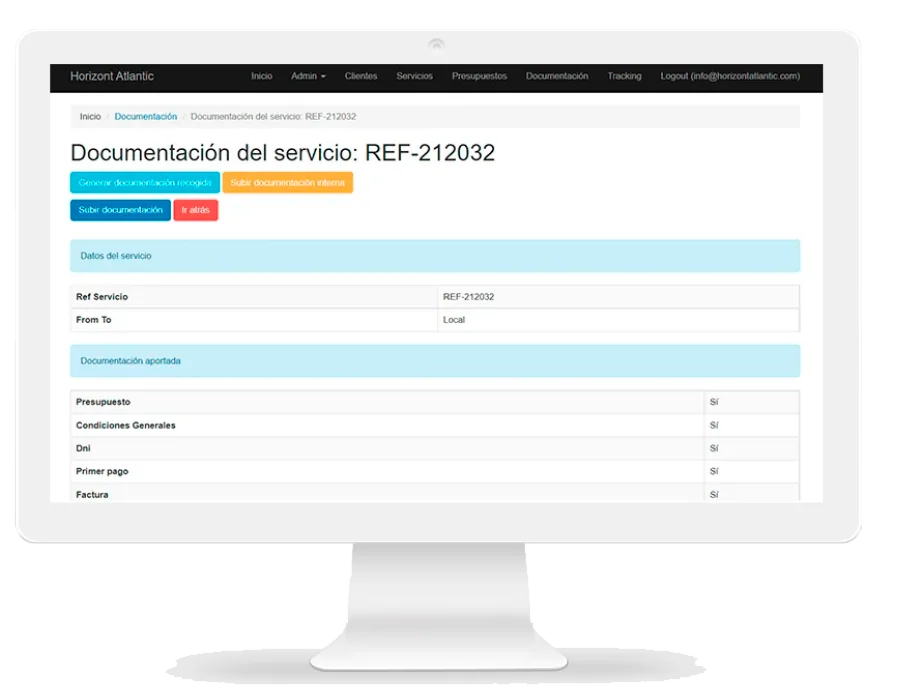
Online tracking
After over 15 years repeating the same processes countless times, we set out to create an intuitive, functional tool.
- We optimise the time to upload and sign documents
- We make online tracking easy
- We simplify payments and invoicing
Servicios relacionados en Gran Canaria
Si además del despacho necesitas transporte, almacenaje o la mudanza completa:
- Mudanzas en Las Palmas de Gran Canaria
- Guardamuebles en Las Palmas
- Mudanzas de Valencia a Gran Canaria
- Mudanzas de Barcelona a Gran Canaria
- Mudanzas de Sevilla a Gran Canaria
- Transporte en contenedor a Canarias
- Despacho de aduanas entre Canarias y la Península
En Tenerife trabajamos igual: agente de aduanas en Tenerife. Y en el lado peninsular despachamos en Valencia, Barcelona, Bilbao, Sevilla y Algeciras.