
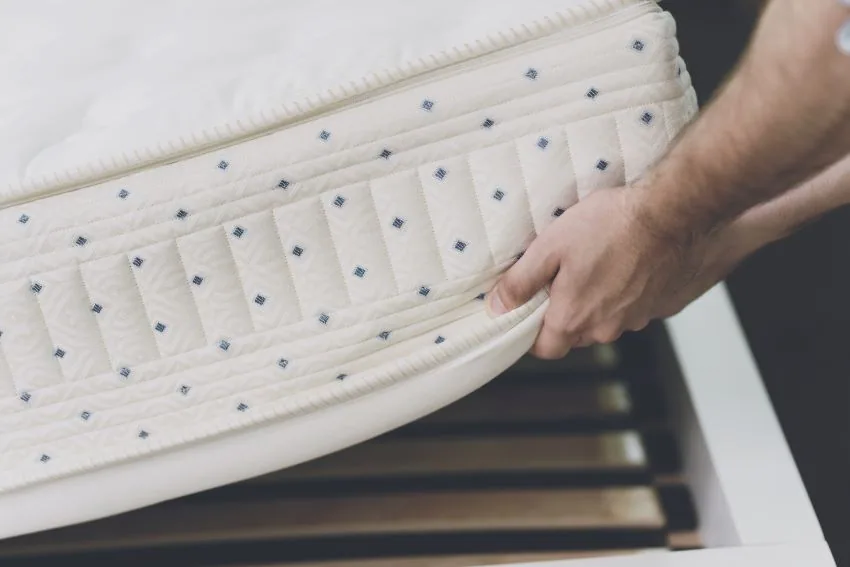
Moving a mattress is already complicated over short distances; when it also involves a multi-day sea voyage to an island like the Canary Islands, conditions change radically: humidity, container temperature, repeated handling, risk of odour absorption. This guide explains how to protect your mattress during an inter-island or Canary Islands move, and when it makes more sense to buy a new one at your destination rather than shipping it.
When it IS worth transporting the mattress
- Mattress less than 5 years old in good condition
- Premium mattress (Tempur, Hästens, Vispring, Magniflex), whose replacement cost exceeds €1,000
- Mattress adapted to a medical condition (lumbar support, allergies, joints) that you are already used to
- Child's or cot mattress that the child associates with their sleep
When it is NOT worth transporting
- Mattress more than 8–10 years old (lifespan exhausted)
- Old spring mattress (weighs 30–40 kg and performs poorly)
- Mattress with stains, odours or dust mites
- Basic low-cost foam mattresses (€300–500): you are better off buying a new one at your destination than paying for transport
Preparing the mattress in advance
Deep clean 7 days before
Vacuum both sides of the mattress with a fabric-specific nozzle. Apply baking soda (sprinkle, leave 2–4 hours, vacuum). For stains, use professional cleaning or an enzyme spray. A mattress that enters a container damp will COME OUT with guaranteed mould after 10 days at sea.
Complete drying
Before packing, air the mattress upright for 24–48 hours in a dry place. Residual moisture + plastic + sea transit = disaster.
Anti-mite protective cover
Buy a plastic anti-allergy removal cover (€8–15). Cover the mattress completely and seal with packing tape. Reinforce the corners with bubble wrap for impact protection.
How to transport it: recommended positions
Spring mattresses (classic)
Position: FLAT, NEVER on its side. The internal springs shift if transported vertically for hours, losing firmness. In a sea container it should be placed on top of low furniture or on the floor, never upright.
Memory foam mattresses
These can travel vertically or folded (the flexible ones), but not rolled up. If you roll them, the foam can deform permanently or develop internal cracks.
Latex mattresses
Same as foam: flat or vertical, not rolled. Latex is heavier (50–90 kg) and requires 2 people to handle safely.
"Factory-rolled" mattresses (compressed foam)
If the mattress is a Bed in a Box (Emma, Ikea Morgedal, Marmota...), check whether it has already been "expanded" after purchase:
- If it has NEVER been expanded: put it back in the original box
- If it HAS already expanded: it CANNOT be re-compressed at home; transport it flat or vertical
Particularities of sea transport to the Canary Islands
Container humidity
During the 5–9 days of the Cádiz–Tenerife or Barcelona–Las Palmas crossing, the relative humidity inside the container can rise to 80–90% due to overnight condensation. If your mattress is not perfectly dry and protected, it will arrive smelling of damp.
Solution: silica gel anti-humidity bags (3–5 large units) placed inside the plastic cover next to the mattress. They absorb moisture before it reaches the fabric.
Container temperature
In summer, the interior of a container on deck in direct sunlight can exceed 50°C. This does NOT damage the mattress, but it accelerates the activation of any odour or residue. This is why thorough prior cleaning is critical.
Multiple handling
Your mattress will be moved a minimum of 6–8 times: out of the bedroom, loaded onto the lorry, unloaded at the origin warehouse, loaded into the container, unloaded at the destination port, loaded onto the delivery lorry, unloaded at your new home, and set up. Each handling step is a risk. Robust packaging = lower risk of damage.
Approximate transport cost
A single mattress (90×190) in a shared move with your other belongings:
- National mainland move: €30–60 (proportional share of the shipment)
- Mainland–Canary Islands move in a shared container: €80–150
- The mattress alone (without a full move) by courier: €200–400 (not recommended)
When there is a full removal, transporting the mattress adds little extra cost. If you only need to move the mattress, it generally does not pay off.
Alternative: buy new at your destination
There are good options for buying mattresses in the Canary Islands:
- Local shops: Maxcolchón (fast delivery on the main islands), Conforama, Ikea Las Palmas/Tenerife
- Online with Canary Islands delivery: Emma Colchón, Marmota, Plumonatura. Many include shipping + DUA
- Specialist shops: Tempur and Hästens distributors in Las Palmas and Santa Cruz
If your current mattress is more than 5–6 years old, consider selling the old one on Wallapop before moving (you can recover €50–150) and buying a new one when you arrive. You save on transport and start your new life with a refreshed night's sleep.
Specific application: moving with a double bed
If you are transporting a double mattress (135×190 or 150×190), add:
- Minimum 2 people for handling
- Double-size removal cover (slightly more expensive, €12–18)
- Verify that it fits through the doors of the new flat (minimum width 80 cm for a 135 mattress transported on its side)
Reminder: door width is one of the most underestimated factors in removals and the main cause of "impossible to get the mattress into the bedroom" on moving day.
Summary: checklist for transporting a mattress to the Canary Islands
- Vacuum, clean and dry the mattress 7 days before
- Pack with an anti-mite plastic cover + silica gel bags
- Reinforce corners with bubble wrap
- Transport flat (spring) or vertical/flat (foam/latex)
- Ensure the cover seals airtight with tape
- Measure doors and landings beforehand
- Assess: if it is more than 6 years old or a basic model, buy a new one at your destination
Do you need personalised advice?
At Horizont Atlantic we pack removal mattresses to the Canary Islands with approved materials and an anti-humidity protocol. If you want to know the exact cost of transporting your mattress or whether buying new makes more sense, request a quote stating the dimensions and type of mattress. We will advise you with no obligation.
Frequently asked questions about mattress transport
Is it worth transporting an old mattress to the Canary Islands or buying new?
If the mattress is <3 years old and of medium-to-high quality (original price over €500): yes, it is worth taking it (transport ~€80–200 vs. buying new at €600+). If it is 5+ years old, already worn or very cheap: giving it away or selling it at origin and buying new in the Canary Islands is usually the better option. The mattress offer in the Canary Islands is comprehensive (IKEA, Conforama, Maxcolchon, local stores).
How do you pack a mattress for a sea move to the Canary Islands?
Use a plastic removal cover specifically designed for mattresses (available in packaging stores, €8–15), strong adhesive tape to fully seal the cover, rigid cardboard corner protectors on all 4 corners, keep the mattress upright during transport (do NOT fold it — this damages the internal foam), and store it in a dry area of the container (away from potential moisture).
Can a mattress be transported folded or rolled up?
Modern roll-up mattresses (compressed memory foam) can be rolled/compressed for transport (check the manufacturer's instructions). Traditional spring mattresses should NOT be rolled — it breaks the internal springs. For long-distance moves (Canary Islands) with spring mattresses: flat or upright and well packed — never folded.
How long does it take for a new mattress to acclimatise after a move?
2–7 days depending on type: spring mattresses 1–2 days (recover shape quickly), memory foam 3–7 days (especially if they arrived rolled up), latex 2–3 days. In warmer climates like the Canary Islands, rolled mattresses expand faster. If after 14 days it has not recovered its shape or still smells of chemicals, contact the manufacturer.
Are there duties or taxes on bringing new mattresses into the Canary Islands?
If the mattress is used and forms part of your household removal (change of residence), it is exempt from AIEM as household goods. If you buy a new mattress on the mainland and ship it as a product to the Canary Islands, it is subject to AIEM (5–7% of value) and IGIC at destination. If you buy directly in the Canary Islands, you only pay IGIC (7%, lower than the mainland VAT of 21%). More on the tax framework: Canary Islands tax regime.