
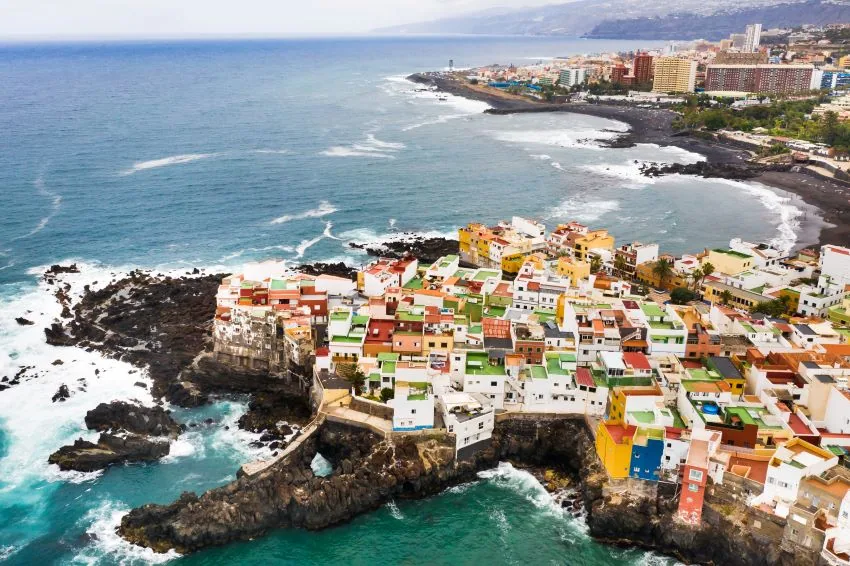
There are many reasons to live in the Canary Islands and take a change of scenery if that were our decision. A large number of tourists have fallen in love with these islands for their good weather 365 days a year, the tranquility, as well as the friendliness of its people. However, there are more compelling reasons to choose this destination as a residence, whether for a work relocation or to improve our health.
4 reasons why you should move to the Canary Islands
The Fortunate Isles have a large number of tourist attractions, such as good weather, paradisiacal beaches, protected landscapes or exceptional gastronomy. There are many reasons to decide to live in the Canary Islands or try the experience for some time. Next, we are going to list some of the compelling reasons to choose one of these islands.
The best weather in the world
If the Canary Islands can boast of something, it is its good weather throughout the year, with very pleasant and spring-like temperatures. Without a doubt, the Canary archipelago has become the "Caribbean of Europe" and stands out as a privileged destination. For example, if you want to live in Gran Canaria, you should know that the annual average is 24 °C and that you will be able to discover a continent in miniature.
Interculturality
Other great advantages of living in this paradise include the possibility of meeting people from many countries. These islands are like a magnet and many tourists, after enjoying their holidays, decide to settle here. For this reason, we can find a large number of nationalities (Germans, English, Nordic, African, etc.) living together in a safe environment.
Beach lovers
All lovers of beaches and water sports have the option to enjoy a unique environment. There are long kilometers of coastline to walk, swim, as well as unique spaces to admire, such as the Dunes of Maspalomas, among others. On the other hand, the practice of surf, windsurf or other sports activities, are very recommended for their favorable conditions.
Working in the Canary Islands
We could ask ourselves where there is more work in the Canary Islands if we decide to make a change of residence. In this regard, it should be noted that the tourism and restaurant sector is where there is the greatest demand for employment. However, this will depend on the person's occupation or their desire to undertake. In recent years, Las Palmas de Gran Canaria has become the ideal destination for digital nomads.
Also, we could ask ourselves which is the best island in the Canary Islands to live on. This answer is not simple at all, because each one is different, although it is true that Tenerife and Gran Canaria are the largest and most populated. This does not mean that there are people who prefer quieter places like Fuerteventura or Lanzarote.
In short, if you are going to make a move from the Mainland to the Canary Islands or from another international destination, do not hesitate to count on a moving service such as the one offered by our company, Horizont Atlantic. In addition, we have storage facilities and storerooms, both in Gran Canaria and Tenerife. Living in the Canary Islands is a true privilege! Request information with no obligation.
Frequently asked questions about living in the Canary Islands
Is the Canary Islands a good place to telework?
Excellent. Stable weather all year round, fiber optic in all urban areas, growing digital nomad community (Tenerife, Gran Canaria, Lanzarote, Fuerteventura), coworkings in almost all islands and attractive tax regime for self-employed by IGIC regime vs mainland VAT. More detail in moving and telework.
Which island is better to live on as a family?
It depends on your lifestyle. Tenerife and Gran Canaria offer complete services (hospitals, international schools, cultural offerings). Lanzarote and Fuerteventura are quieter with good international community. La Palma and La Gomera are ideal for those seeking nature and a slow-paced life with fewer services. For young families with good incomes: north Tenerife (Puerto, Orotava) or south Gran Canaria.
How much does it cost to live in the Canary Islands compared to the mainland?
Daily life similar or slightly more expensive than Spanish average (imported food costs more, transport by island more expensive), but compensated by: more affordable housing than Madrid/Barcelona, cheaper electricity, autonomous IRPF deductions, 75% resident discount on flights and boats to mainland, IGIC exemption on many professional services (vs VAT 21%).
Is it difficult to register and obtain Canarian residency?
Not complicated for Spanish or EU citizens: it is enough to have a home (rental contract or deed) and register in the town hall. The process is online or in-person and is obtained in a few days. For non-EU citizens a visa or prior residence permit is required. More detail: register in the Canary Islands.
What is the main disadvantage of living in the Canary Islands?
Double insularity: for professionals with clients in Europe you have to fly (although there are many connections), imported products (cars, appliances, electronics) arrive later and more expensive, and to access rare medical specialties or very specific services you have to travel to the mainland. For most, the climate and tax advantages more than compensate for these drawbacks.
If after reading this you are seriously considering it, the next step is the move. We tell you how the moves to the Canary Islands from the Mainland are: maritime transport, DUA and relocation franchise managed. And if one day the reverse route happens, there is the route for moves from the Canary Islands to the Mainland.