
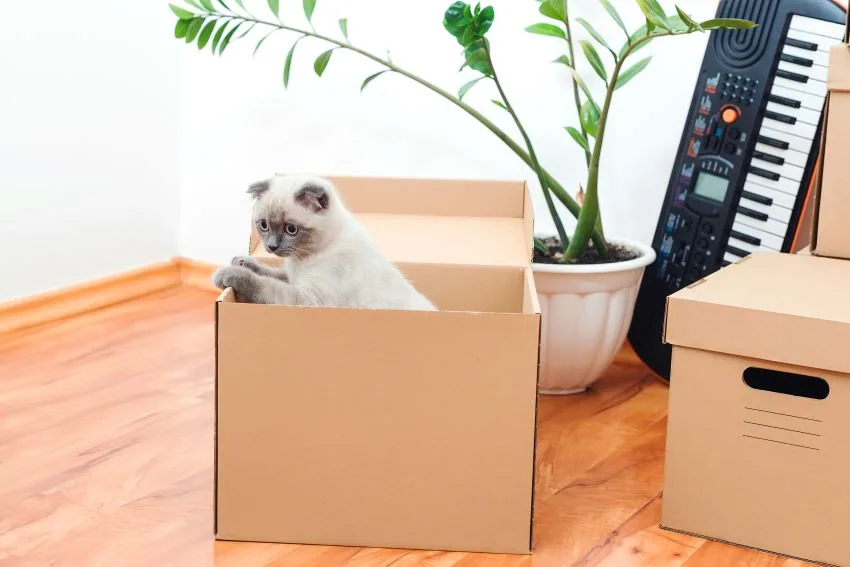
Moving with cats can cause various disorders for them, this is because they are territorial animals and when they get used to an environment they don't like leaving it. If you are going to relocate and have felines at home we give you some tips so everything goes smoothly.
You need to keep in mind the general tips for carrying out a move and the specific ones for transporting these animals. Below you can find some small tips.
How to carry out a move with cats
If you have a cat you will know that they are very sensitive to changes at home, they even notice when you add or change an object or furniture, so a move for them is a big change to face and we must help them manage it as best as possible.
To do this we are going to see what we can do before, during and after the move.
Pre-move
Before starting the move prepare a room in the house, clear it of furniture and fragile objects, and gradually place things that are theirs in it that make them feel comfortable, bed, scratching post, food bowls… Spend time with them in that room, and from time to time let them be there alone by closing the door, so they get used to it and end up being a place where they feel safe. This will be their refuge room on moving day, away from noise, hustle and bustle and strangers. Likewise go getting them used to the carrier where you will transport them. That way they won't be afraid to get in it when the time comes.
During the move
While you carry out the move they will be in their refuge room, better if you leave them a television or radio on to dampen the noise a bit. Go in from time to time to let them know that everything is fine and nothing bad is happening, treat them with some candy or toy, so that that moment is positive. Leave their transport for the end of the move, take them in the carrier where they already feel safe and comfortable and go directly to the new house if possible. If the trip is long make sure you can give them something to drink and something to eat, but not too much, in case they might get dizzy on the way.
Post-move
The most important thing is not to force adaptation. Changing homes in cats is a process in which each one has their own time. Normally, they usually take about a week to finish getting used to it. You can help them simply by trying to maintain the routines you had in the other house.
Disadvantages of changing homes with your cats
Cats don't handle changes in their environment very well. Some are especially susceptible and even they may lose their appetite. If we don't take special care in the process they may develop behavioral problems such as fear, nervousness and aggressive reactions. A feline can become ill and present physical ailments in response to a situation of high stress and anxiety such as intestinal problems and hair loss.
But a well-planned move with cats doesn't have to be a negative moment for you, enjoy this change with them and welcome together this new stage and the new home.
Frequently asked questions about moving with cats
Why do cats suffer more than dogs with moves?
Cats are territorial animals and of extreme routine: the abrupt change of environment (smells, sounds, distribution) stresses them very much. They can manifest: hiding for days, refusing to eat, vomiting, marking new areas with urine, isolating themselves or being aggressive. Patience and specific planning are key.
How to prepare the cat before the move?
2-3 weeks before: introduce the carrier in the cat's usual area with food inside (associate with positive experience), spray calming pheromones (Feliway) in common areas. 1 week before: start packing gradually so the cat gets used to the visual chaos without acute stress. Day before: preventive veterinary routine visit if it is a very nervous cat.
What do I do with the cat on moving day?
The IDEAL: that they are NOT at home. That they spend the day in a specialized cat facility or trusted friend's house. If not possible: lock the cat in a specific room (small bathroom works) with food, water, litter box, family blanket and their carrier. Isolate the room from noise (door closed, no workers entering). The cat will survive but will be very stressed.
How to introduce the cat to the new home?
Gradual strategy: confine them FIRST in a specific room (their "safe room") with everything necessary (food, water, litter box, blanket and familiar toys, open carrier). Let them explore just that room for 2-3 days. Then open the door for them to explore the rest at their own pace. If you have Feliway pheromones, spray common areas. Avoid visits during the first 2 weeks.
How long does it take a cat to adapt to a new home?
Average timeframe: 2-4 weeks to feel comfortable, 1-3 months for complete integration. Some cats adapt in days (the most sociable), others may need 6 months (the most territorial or already older). Keep strict routines: fixed feeding schedules, daily play, no interruptions from strange noises. If the cat is still very stressed after 6 weeks or stops eating for >3 days, consult a veterinarian. More about pets: move with dogs.
If your move is to the Canary Islands, the cat travels by another route: consult the transport of pets to the Canary Islands, with microchip, animal passport and veterinary certificate processed by us.