
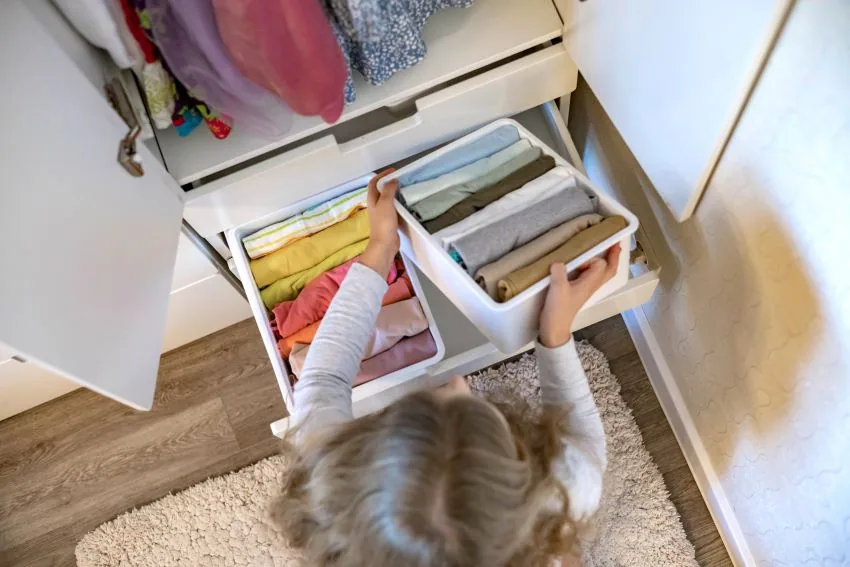
Moving to a new home is an exciting prospect in most cases. However, it requires careful planning and organisation so that the change does not become overwhelming. If we follow the tips for a Marie Kondo move, everything will be much simpler.
Who is Marie Kondo
The entrepreneur, consultant and author, Marie Kondo is the creator of the KonMari Method for organising furniture, belongings and clothing by location. Ever since the series "Tidying Up with Marie Kondo!" premiered on Netflix, this guru of organisation has been on everyone's lips.
She has written four books that have earned her worldwide fame through their sales figures. The bestsellers The Life-Changing Magic of Tidying Up and Spark Joy, also translated into English and Spanish, explore how a tidier life leads to greater fulfilment and happiness.
The core principles of this method revolve around a commitment to order — discarding what no longer serves us and achieving an ideal lifestyle. The Japanese entrepreneur believes we should keep only objects with sentimental value and be grateful for the rest of our belongings that no longer bring us joy.
Moving tips according to Marie Kondo
How do you prepare for a quick move? When time is short, a house move can become genuinely stressful. That is why working with professionals like Horizont Atlantic is a real guarantee of peace of mind.
First of all, we should know that tidying the current home makes the whole task far easier and more manageable. Below, we share the tips for an organised move as proposed by Marie Kondo.
1. Visualise the life you want to live
Picturing how you want to live in your new home makes it much easier to decide which objects and furniture you still need. Imagine everything — from the wall colours and photographs to the pictures in the hallway. This strengthens your connection with the new home before the move even begins.
2. The space
You need a clear idea of the available space to make the right decisions. This will help you determine what to take with you and how many square metres are available for your sofa, for example. The goal is to move only the items you love. It is therefore recommended to draw up a list of everything that is truly essential.
3. Label the boxes
Choose boxes in different sizes to accommodate your belongings. Storing items in boxes by subcategory allows you to make the most of the available space. It will also make it much easier to place them correctly in your new home.
4. A survival box
Marie Kondo also stresses the importance of gathering the basics into a survival box for the first few days. This helps to carry out the move with greater peace of mind. Inside you will find plates, pans, a toiletry bag with hygiene products, essential clothing, and so on.
5. Bless your old home
Finally, it is important to be grateful and bless the home that has sheltered you throughout the time you lived there. Walk through every room and say your goodbyes. You may also burn incense and leave the space clean and ready for its new occupants.
In short, these are some moving tips inspired by the Japanese author. In addition, hiring a professional removal company always saves time and headaches. Do not hesitate to ask about the services we offer — we are a benchmark in this sector in the Canary Islands and have a team of highly experienced professionals.
Frequently asked questions about the Marie Kondo method and removals
Does the KonMari method really work for a house move?
Yes, it is especially useful for removals. The philosophy of "keeping only what sparks joy" helps significantly reduce the volume of items to transport (roughly 20–30% less), lowering the cost of the move and simplifying unpacking at the destination. It is one of the few systematic methods for decluttering.
Where do I start with KonMari-style tidying before I move?
Marie Kondo recommends tidying by category (not by room) in the following order: 1) Clothing, 2) Books, 3) Papers, 4) Komono (miscellaneous: kitchen, bathroom, garage), 5) Sentimental items and photographs. If your move is just a few weeks away, prioritise categories 1–3, as they yield the greatest volume reduction.
What do I do with the things I discard?
In order of greatest to least effort: sell valuable items on Wallapop or Vinted, donate good-condition items to Cáritas or Cruz Roja, give things to family or friends who might use them, and take recyclable and disposable items to a recycling centre. Every box you discard means 15–25 € less on your removal bill.
Is it a good idea to apply KonMari if I am already stressed about the move?
Yes, but adapt the pace. Do not try to do "the big KonMari declutter" in the final weekend. Start 4–6 weeks beforehand, spending around one hour per day on each category. For moves involving 2–3 people, divide the tasks: one person handles clothing, another handles books, and so on. Stress decreases as decluttering progresses — fewer things to pack.
Are there items I should NOT discard even if they "don't spark joy"?
Yes, of course: important documents (ID, property deeds, contracts, certificates), regular medication and medical supplies, basic tools (hammer, screwdriver, tape), hygiene products, spare glasses, chargers for essential devices. KonMari does not apply to functional necessities — only to decorative and accumulated items. More on planning: budget removals, money-saving techniques.