More and more people are asking themselves how to become a digital nomad, because this lifestyle — which lets you discover the world while continuing to advance your professional career — is shaping up as one of the most attractive ways to live today.
What is a digital nomad
A nomad is a person who moves from place to place, never settling anywhere for too long. Originally, human beings were nomadic, travelling in search of resources to survive.
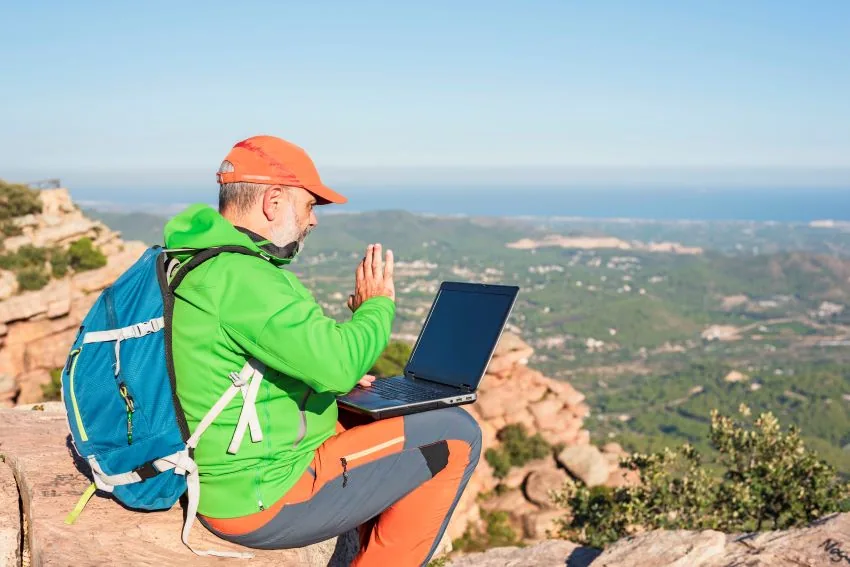
Thousands of years later, nomadism has a more digital version. We call digital nomads those freelance professionals, entrepreneurs and remote workers who do not need to spend their time in one fixed location. With a laptop and an internet connection, they can do their work from anywhere in the world — and that is exactly what they do.
They have a lifestyle that combines professional growth with the discovery of new places and new cultures. The nomad does not settle down; they find a hotel, a home or a coliving space and spend some time in each location. Sometimes it is just a few weeks, but other times they stay for months.
They organise their time so that work and sightseeing can coexist. For example, they might start working very early and keep their afternoons free for exploring new places, or concentrate all their work into three or four days a week and enjoy their destination for the rest of the time.
How to become a digital nomad: follow these tips
Travel light
One of the keys to the digital nomad life is not spending too much. This type of traveller is always on the hunt for great deals to get from one place to another, and to do that comfortably while keeping costs down, they need to travel light.
Everything people living this lifestyle need fits in a backpack — which, of course, must always include essentials such as a laptop and a portable router.
Cut your expenses back home
If you are going to travel the world, reduce your fixed expenses at home as much as possible. If you own your home, you could consider renting it out for the months you will be away. Alternatively, if you are renting, it is better to give notice and terminate your contract.
A storage unit is always a good idea
But what happens to your belongings? Even if you get used to living with the bare minimum while travelling, you will almost certainly want your books, your music, your clothes and everything else when you return home. In that case, the best solution is to pack everything carefully and leave it in a storage unit or self-storage facility, like the ones we offer at Horizont Atlantic. That way you have peace of mind knowing your belongings are safe and protected while you are away.
Take out a good insurance policy
Being a digital nomad has many benefits, but also some drawbacks — one of them being that you could run into serious problems if you fall ill or have an accident, since healthcare is not free in many parts of the world. Save yourself the worry before you leave home and invest in insurance that guarantees you solid coverage.
These are the first steps when it comes to how to become a digital nomad. Of course, you also need some savings and a job that allows you to support yourself wherever you are. So — are you ready to give this lifestyle a try?
Frequently asked questions about the digital nomad lifestyle
Are the Canary Islands a good destination for digital nomads?
Yes, one of the best in Europe. Exceptional year-round climate, fibre-optic broadband in urban areas, a thriving digital nomad community (south Tenerife, Las Palmas Canteras, Lanzarote Famara, Fuerteventura Corralejo), coworking spaces, attractive tax conditions under the IGIC regime (vs mainland VAT), excellent air connections to the rest of Europe and a reasonable cost of living. More details: relocation and remote work.
What internet connection do I need to work remotely effectively?
A minimum of 100 Mbps symmetrical (upload speed matters just as much as download). For stable HD video conferencing: 50+ Mbps real-world speeds. For frequent large-file transfers (video, 3D design): 300+ Mbps symmetrical. Always use a wired connection (not Wi-Fi) for critical meetings.
Is it worth renting monthly versus a hotel or coliving?
For a stay of 1–2 months: a hotel or Airbnb can be a valid option (no commitment, but more expensive). For 3+ months: a traditional rental contract is more cost-effective and gives you a stable registered address. Coliving (Sun and Co, NomadX, Selina) is a social alternative with an instant network — ideal for solo nomads.
Do I need a Spanish SIM card as a digital nomad?
If you are spending more than 3 months in Spain: yes, a Spanish SIM card (Yoigo, Movistar, Vodafone, Digi) is a good idea. It gives you a Spanish number for official matters, better local coverage and more affordable data plans. If you are a tax resident elsewhere but spend seasons here, an international eSIM (Holafly, Airalo) may be enough.
Do I need to register as a resident as a digital nomad in Spain?
If you spend more than 6 months a year in Spain: yes, by law you must register as a tax resident and enrol on the local municipal register (padrón) in a municipality. For true nomads with frequent rotation between countries: your tax residence is where you spend most of the year. There has been a specific "Digital Nomad Visa" for non-EU citizens since 2023, with special tax conditions.